Establishing the Gathering Foundation
Every successful Melvor Idle 2 account begins with its gathering disciplines: Woodcutting, Fishing, Mining, and the new Hunting system. Unlike artisan skills (which consume raw materials) or combat (which consumes food, potions, and ammunition), gathering skills generate wealth, materials, and experience completely free of cost.
However, many beginner players fall into the trap of hyper-focusing on a single gathering skill—such as chopping trees to level 99 while neglecting Mining and Fishing. This creates severe economic bottlenecks later when high-tier artisan recipes demand balanced inputs. By following an optimized priority rotation, your character will maintain a seamless flow of materials directly into our All Skills Guide recommendations.
The Recommended Gathering Order
To achieve maximum efficiency without bottlenecking your bank space or crafting options, follow this step-by-step gathering sequence during your first week of play:
Phase 1: Woodcutting to Level 25 (The Dual-Chop Benchmark)
- Goal: Unlock the ability to chop two distinct tree types simultaneously.
- Process: Chop Normal Trees until level 10, then Oak Trees until level 25.
- Why It Matters: Reaching level 25 doubles your logs-per-hour output permanently. Once unlocked, set one slot to Oak and one to Willow to rapidly build fletching stock.
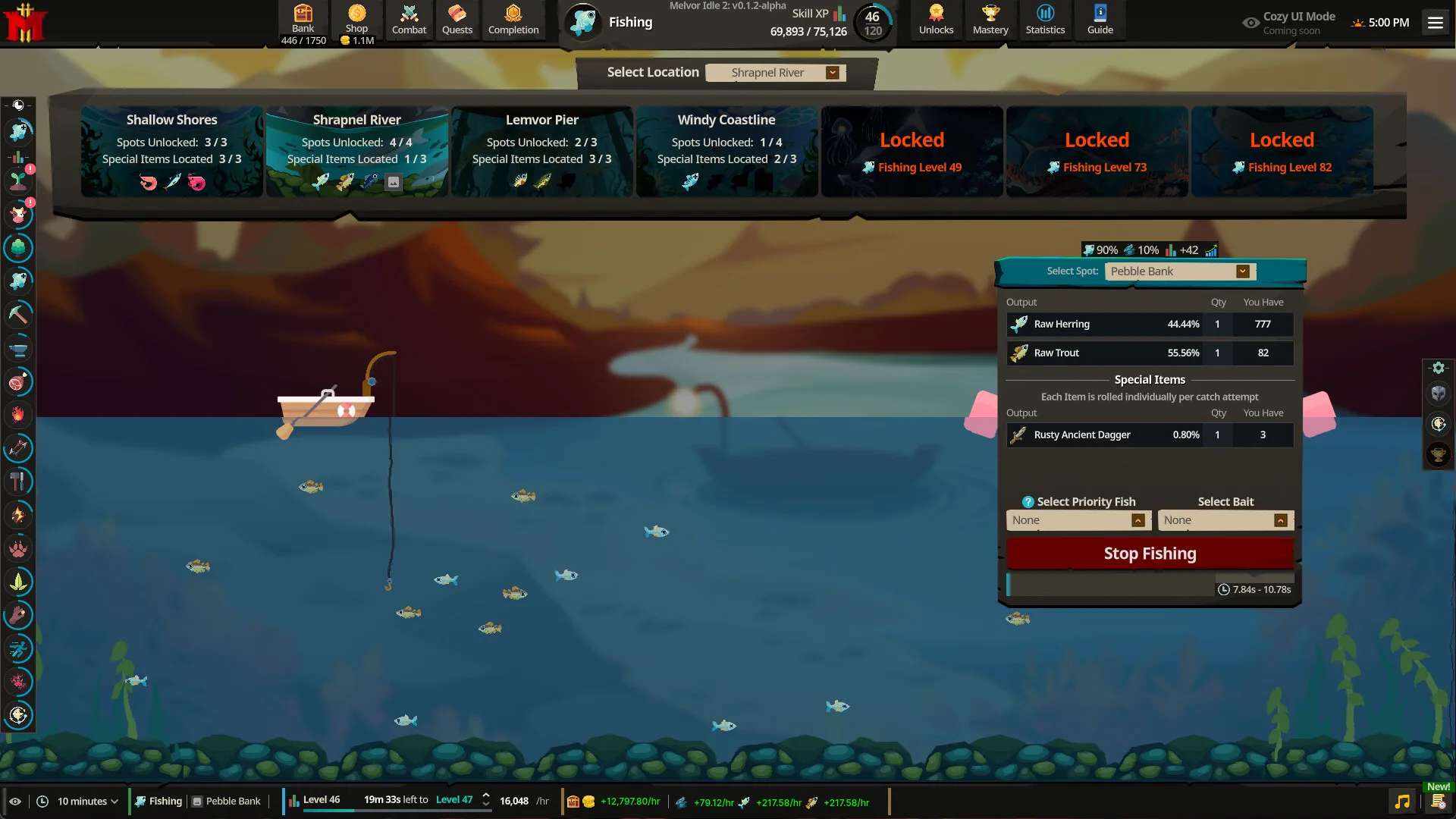
Phase 2: Fishing to Level 50 (Food Security)
- Goal: Accumulate a buffer of at least 10,000 raw fish (Trout, Salmon, and Lobsters).
- Process: Fish Raw Shrimp and Sardines to level 20, move to Trout and Salmon until level 40, then farm Lobster spots.
- Why It Matters: Cooked lobsters provide the fundamental healing sustenance required to survive dungeon progression without frequent auto-eat deaths.
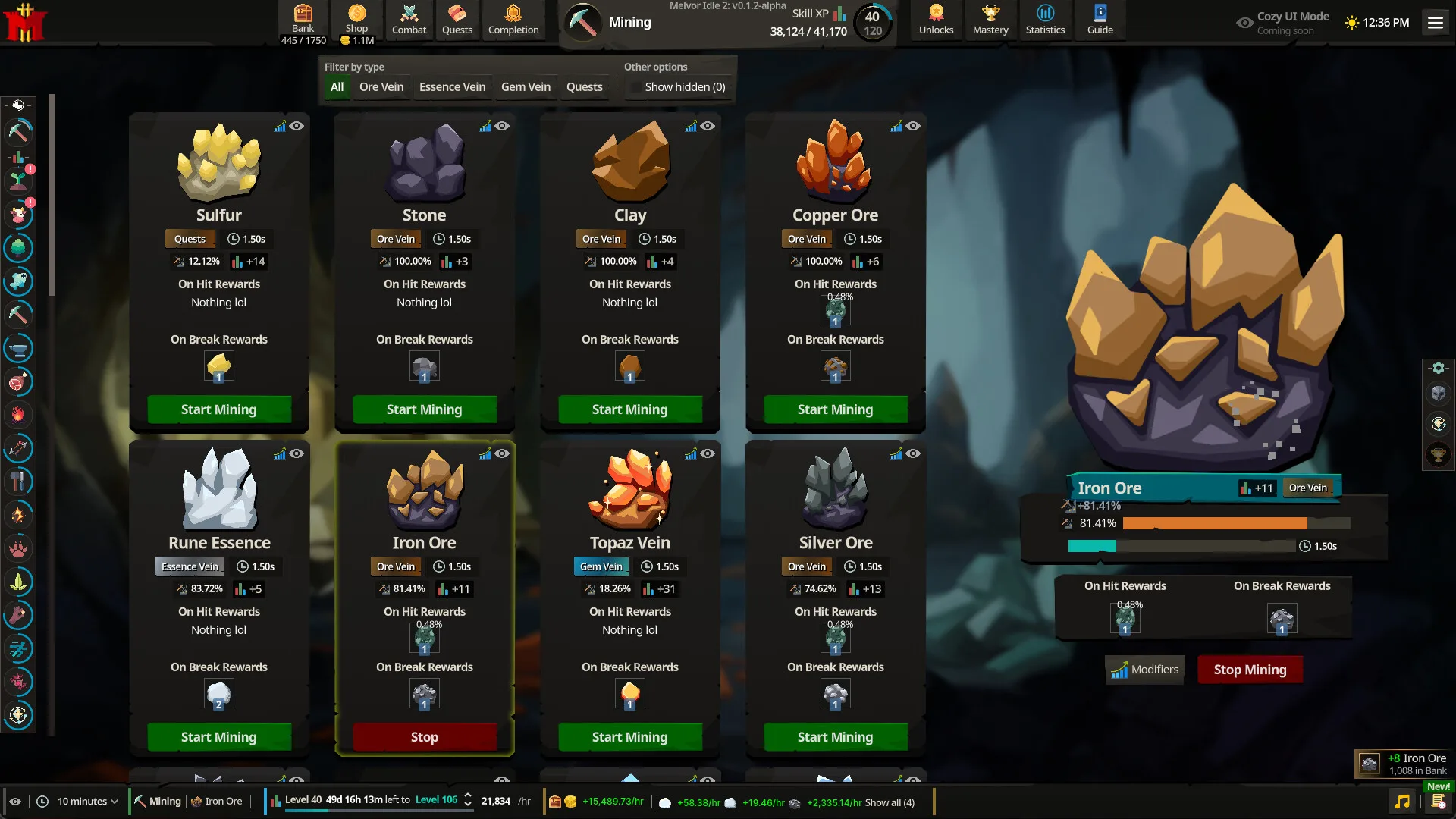
Phase 3: Mining to Level 60 (The Coal & Runite Seams)
- Goal: Stockpile Copper, Tin, Iron, and substantial quantities of Coal.
- Process: Mine Copper and Tin in a 1:1 ratio for Bronze, transition to Iron at level 15, and begin accumulating Coal at level 30.
- Why It Matters: Smithing consumes Coal at escalating rates (from 2 coal per steel bar up to 8 per runite bar). Establishing coal reserves early prevents painful mining pauses later.
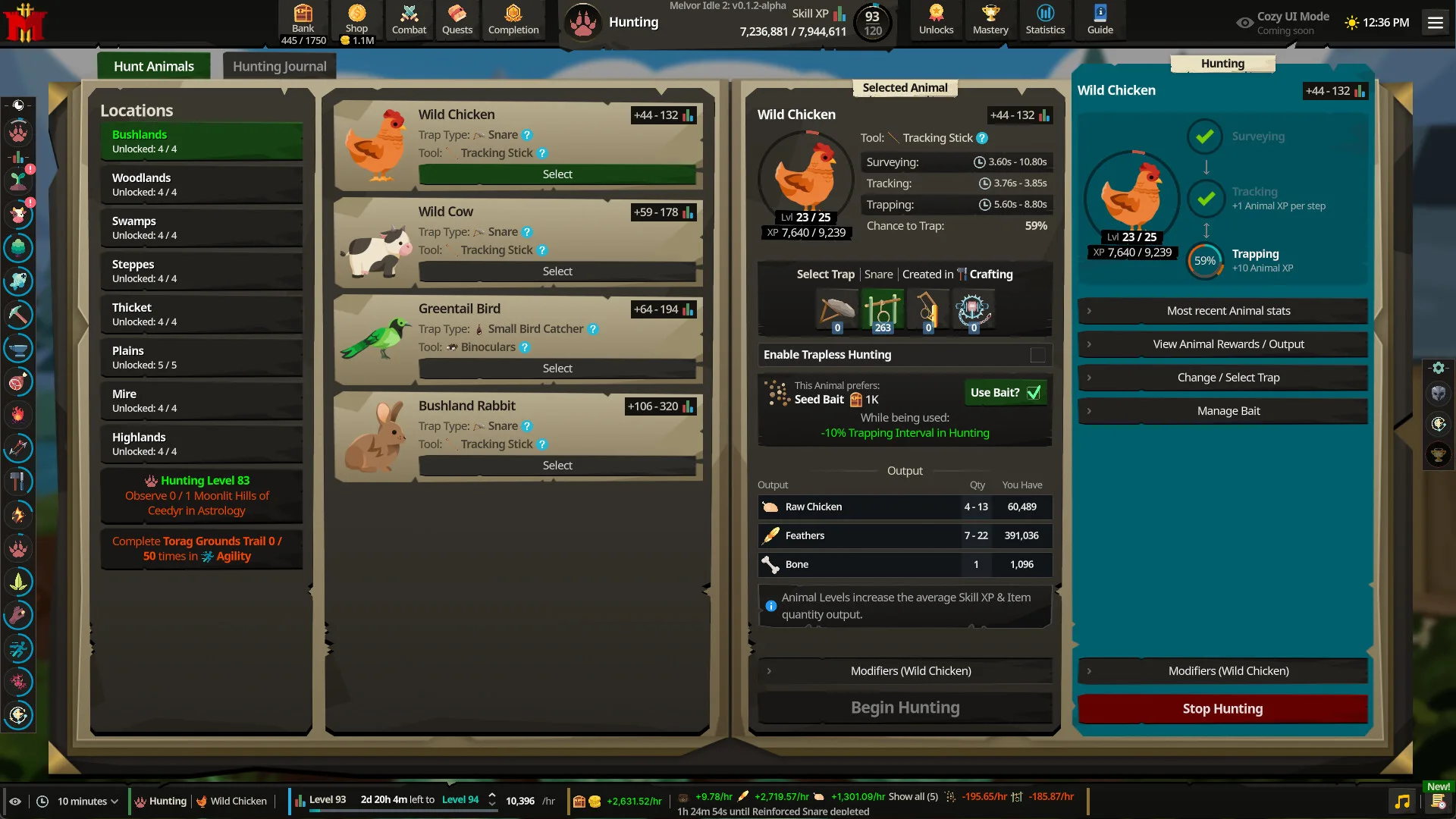
Phase 4: Hunting to Level 50 (Wilderness Pelts)
- Goal: Harvest pelts, bone fragments, and beast sinew across the early biomes detailed in our Hunting & Ranching Guide.
- Process: Hunt Meadow Rabbits to level 20, then Forest Boars and Timber Wolves up to level 50.
- Why It Matters: Directly supplies the initial materials required to craft hybrid defensive armor sets in our Beastcrafting Guide.
Gathering Efficiency Comparison Matrix
| Gathering Skill | Active Time per Action | Primary Byproducts | Critical Level Milestone | Major Economic Synergy |
|---|---|---|---|---|
| Woodcutting | 2.5s – 4.0s (Base) | Bird Nests, Tree Seeds | Level 25 (Dual-Chop Unlock) | Fletching, Firemaking, Farming |
| Fishing | 3.0s – 7.0s (Base) | Treasure Chests, Ancient Relics | Level 65 (Manta Rays) | Cooking, Summoning, Combat Food |
| Mining | 2.0s – 5.0s (Base) | Gems (Ruby/Emerald/Diamond) | Level 40 (Gem Vein Stability) | Smithing, Runecrafting, Crafting |
| Hunting | 3.5s – 6.0s (Base) | Bone Fragments, Monster Claws | Level 55 (Marshland Lurkers) | Beastcrafting, Herblore, Ranching |
Critical Gathering Habits
- Equip Gathering Axes and Pickaxes Immediately: Always spend your early gold upgrading tools in the general store; a Gold Pickaxe or Adamant Axe reduces base action timers by up to 25%.
- Deposit Mastery Tokens Promptly: As explained in our Mastery Guilds Guide, depositing tokens into the Harvesters' League boosts base item preservation across all gathering nodes.
- Save All Bird Nests and Treasure Chests: Do not open nests or chests until you have unlocked high luck potions or stardust modifiers that boost rare drop rolls.
[!TIP] Always train Woodcutting and Fishing overnight during your longest idle sessions. These two skills have stable, non-depleting resource nodes that will never stall or halt production while you sleep.